WAR.GOV NASA Apollo/Gemini/Skylab Material
This page maps the NASA-labeled mission material in WAR.GOV / PURSUE Release 01. It is deliberately conservative: it separates the underlying NASA mission transcript/audio/image records from the 2026 PURSUE release descriptions and from Open Sky analysis. Release inclusion is evidence that these assets were published in the WAR.GOV/PURSUE corpus; it is not by itself evidence that NASA crews reached a modern UAP conclusion. [S1][S2]
Quick facts
- Release family: WAR.GOV / PURSUE Release 01; official landing page and CSV manifest. [S1]
- Mission-file scope: 13 official file assets are represented here — 7 NASA transcript/debriefing PDFs and 6 lunar image files — plus 1 DVIDS-hosted Gemini 7 audio record. [S2]
- Mission families represented: Gemini 7, Apollo 11, Apollo 12, Apollo 17, and Skylab crew/debriefing records. [S3][S4][S5][S6][S7][S8][S9]
- Interpretation boundary: the release descriptions use UAP/unknown framing, but the mission texts themselves include ordinary mission-context candidates such as boosters, S-IVB, ice/paint, Mylar, RCS effects, light-flash/cosmic-particle context, satellites, and Skylab debris. [S3][S5][S6][S9]
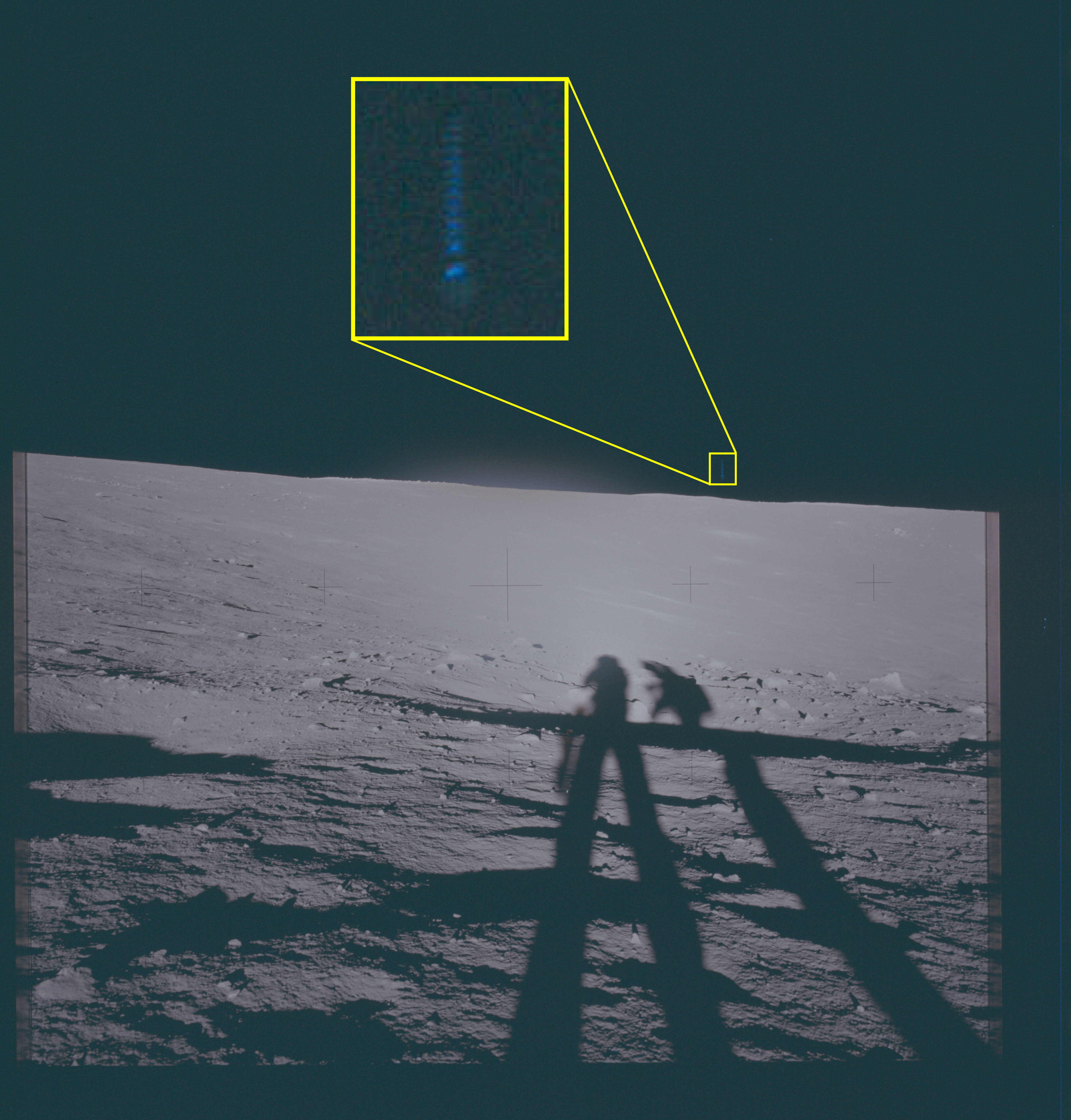
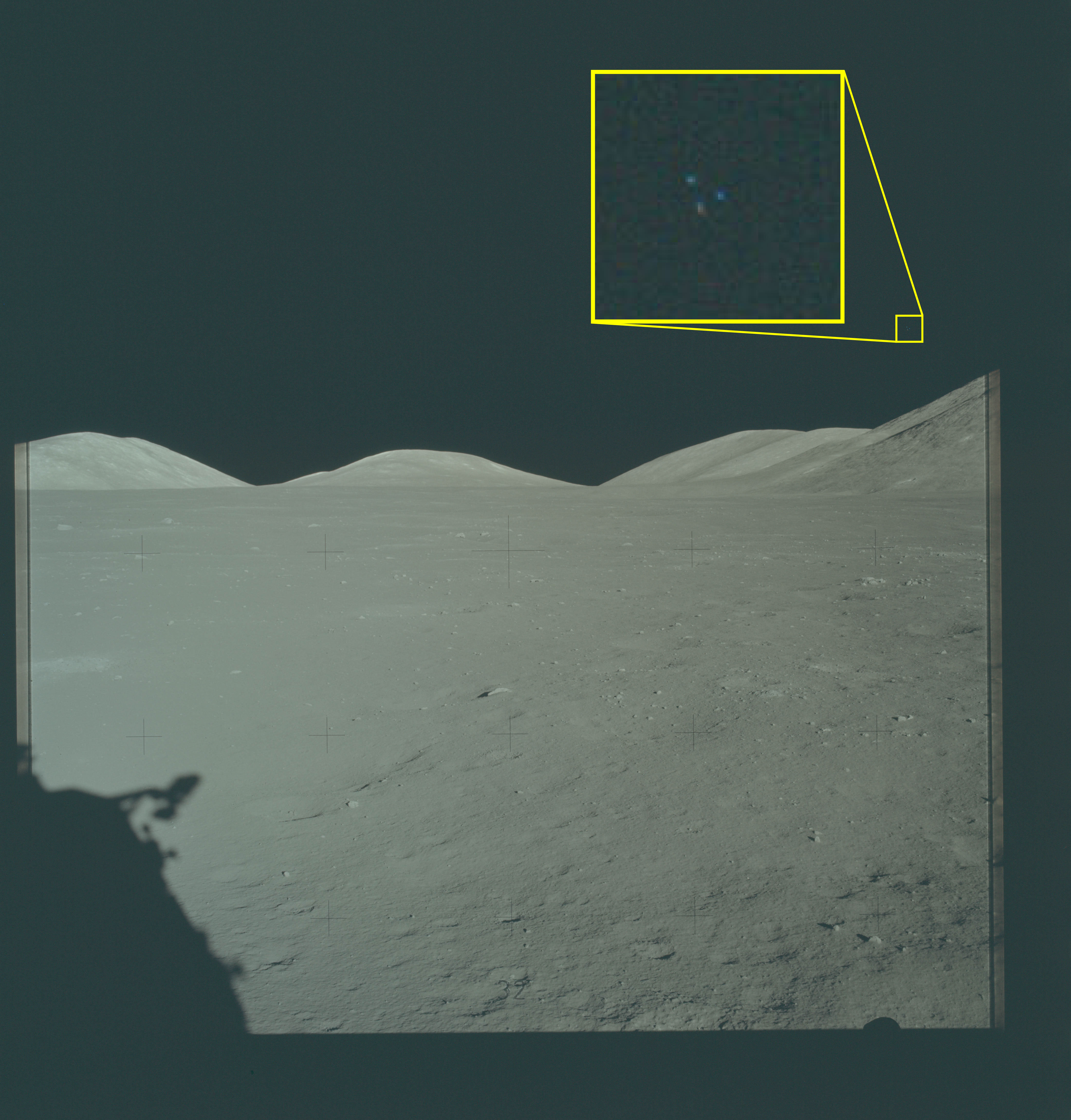
- Image boundary: the six VM images are release-highlighted derivatives; original NASA frame IDs, crop/scan history, and unmodified archive copies still need to be compared before any visual conclusion. [S10]
- Crosslink posture: this generator found no NASA mission-material graph lead rows in the current graph query; this is a bounded result, not proof no future crosslinks exist. [S2]
Mission-record vs later-interpretation boundary
The strongest thing Open Sky can say now is that Release 01 includes official-source pointers, cached files, OCR text, hashes, and manifest descriptions for NASA-adjacent mission records. The page should not flatten those layers. A transcript quote from Gemini, Apollo, or Skylab is a mission record; a 2026 manifest blurb saying “unidentified phenomenon” is a publisher description; an Open Sky prosaic lane is analysis and remains pending until checked. [S1][S2]
For public writing, the NASA lane needs special care because historic astronaut remarks are easy to over-read. When an excerpt says “bogey,” “particles,” “flashes,” “possible laser,” or “satellite,” quote the source and preserve its context rather than turning it into a resolved anomaly or a debunk. [S3][S6][S9]
Official assets in this cluster
| Release asset | Mission / record type | Official-source status | Review status |
|---|---|---|---|
| NASA-UAP-D1, Apollo 12 Transcript, 1969 | Apollo 12 transcript excerpt, November 1969 | official PDF; rows 139; OCR 5 chunks; SHA-256 ab911622b7d4203d | source-mapped; mission context and prosaic/orbital checks pending |
| NASA-UAP-D2, Apollo 17 Transcript, 1972 | Apollo 17 air-to-ground transcript excerpt, December 1972 | official PDF; rows 140; OCR 16 chunks; SHA-256 9d041c8799a0124d | source-mapped; mission context and prosaic/orbital checks pending |
| NASA-UAP-D3, Gemini 7 Transcript, 1965 | Gemini 7 transcript / PAO release tape transcript, 1965 | official PDF; rows 20; OCR 4 chunks; SHA-256 73cb8f0dc879a388 | source-mapped; mission context and prosaic/orbital checks pending |
| NASA-UAP-D4, Apollo 11 Technical Crew Debriefing, 1969 | Apollo 11 technical crew debriefing excerpts, July 1969 | official PDF; rows 141; OCR 8 chunks; SHA-256 aacc41814dd16583 | source-mapped; mission context and prosaic/orbital checks pending |
| NASA-UAP-D5, Apollo 17 Crew Debriefing for Science, 1973 | Apollo 17 science debriefing excerpt, January 1973 | official PDF; rows 142; OCR 2 chunks; SHA-256 5d7db3870de8c01a | source-mapped; mission context and prosaic/orbital checks pending |
| NASA-UAP-D6, Apollo 17 Technical Crew Debriefing, 1973 | Apollo 17 technical crew debriefing excerpt, January 1973 | official PDF; rows 143; OCR 2 chunks; SHA-256 2c874c40c55505f2 | source-mapped; mission context and prosaic/orbital checks pending |
| NASA-UAP-D7, Skylab Techincal Crew Debriefing 1973 | Skylab technical crew debriefing excerpts, 1973–1974 documentation | official PDF; rows 144; OCR 7 chunks; SHA-256 49e232c72a77f16f | source-mapped; mission context and prosaic/orbital checks pending |
| NASA-UAP-VM1, Apollo 12, 1969 | Release-highlighted lunar image; 1969 / Moon | official image file; rows 145; SHA-256 7f1c6a3220d6c590 | original NASA frame ID and unmodified-image comparison pending |
| NASA-UAP-VM2, Apollo 12, 1969 | Release-highlighted lunar image; 1969 / Moon | official image file; rows 146; SHA-256 acaa311b10923b3a | original NASA frame ID and unmodified-image comparison pending |
| NASA-UAP-VM3, Apollo 12, 1969 | Release-highlighted lunar image; 1969 / Moon | official image file; rows 147; SHA-256 cc3ac0d680084861 | original NASA frame ID and unmodified-image comparison pending |
| NASA-UAP-VM4, Apollo 12, 1969 | Release-highlighted lunar image; 1969 / Moon | official image file; rows 148; SHA-256 92ae47295e427519 | original NASA frame ID and unmodified-image comparison pending |
| NASA-UAP-VM5, Apollo 12, 1969 | Release-highlighted lunar image; 1969 / Moon | official image file; rows 149; SHA-256 472793feaf12754d | original NASA frame ID and unmodified-image comparison pending |
| NASA-UAP-VM6, Apollo 17, 1972 | Release-highlighted lunar image; 1972 / Moon | official image file; rows 150; SHA-256 ce62e46b3535a468 | original NASA frame ID and unmodified-image comparison pending |
| NASA-UAP-D3A, Gemini 7 Audio Excerpt, 1965 | DVIDS-hosted audio excerpt from Gemini 7 air-to-ground communications | DVIDS 1006119; rows 21; MP4 SHA-256 4965639958d9a9dd | source-mapped; transcript/audio alignment pending |
Source excerpts / evidence summary
| Mission / asset | What the official corpus says | How Open Sky should handle it now |
|---|---|---|
| Gemini 7 transcript and D3A audio | Borman reports a “bogey” at 10 o'clock high; the same transcript/audio context discusses debris, booster visibility, hundreds of particles, and Lovell's “brilliant body” near the booster. [S3][S4] | Treat as a mission-record/audio-alignment lane first. The word “bogey” is historic flight-control nomenclature, not a modern finding. |
| Apollo 12 transcript | Bean describes particles/flashes of light through the AOT and says some appeared to be “escaping the Moon”; the same excerpt later includes a ground comment that similar behavior had been seen during spacecraft testing and was “probably an RCS” issue. [S5] | Separate the observed light/particle language from the candidate RCS/spacecraft-context explanation before any public claim. |
| Apollo 17 transcript | The air-to-ground excerpt includes bright particles/fragments after maneuvering and crew/ground speculation about S-IVB, ice chunks, paint, or related spacecraft material; later lines discuss a bright distant rotating object. [S6] | Orbital debris/mission-hardware checks are primary. Do not isolate the bright-object lines from the surrounding S-IVB/ice/paint discussion. |
| Apollo 11 technical crew debriefing | The debriefing contains an outbound object with uncertain size/range, crew speculation about S-IVB or spacecraft-origin material, cabin light flashes, and a return-trip light source later discussed as possible laser or reflection off a lake. [S7] | This is the clearest example where mission text itself contains competing explanations. Preserve all of them. |
| Apollo 17 science and technical debriefings | The science debriefing discusses unexpected UV/extragalactic/interstellar-dust possibilities; the technical debriefing discusses light flashes during dark adaptation and ALFMED context. [S8][S9] | Handle as science/space-environment records, not object-identity claims. |
| Skylab debriefing | Skylab excerpts discuss light flashes, a satellite in a similar orbit, a large reddish star-like object, and flashing lights presumed by crew to be other pieces of Skylab or satellites. [S9] | Satellite/orbital-debris review is built into the source text and should lead the Watcher workflow. |
| Apollo 12/17 VM images | Release images contain highlighted areas or “dots” in lunar-surface/sky imagery and the descriptions warn that the highlights are informational rather than analytical determinations. [S10] | Original-frame provenance, highlight/crop comparison, scan artifacts, dust/scratch review, and lunar-image context are mandatory before escalation. |
Claims extracted — source language only
- Gemini 7 source material preserves crew/PAO language around a “bogey,” debris, booster, and particles; it does not by itself identify the object. [S3][S4]
- Apollo 11, Apollo 12, Apollo 17, and Skylab excerpts include visual phenomena reported by crew or debrief participants, but many excerpts also include in-source candidate explanations or contextual hypotheses. [S5][S6][S7][S9]
- Release 01 image records identify highlighted regions in historic lunar imagery, but those highlights are release annotations and must be compared against original NASA archive images before interpretation. [S10]
- No Open Sky graph conclusion nodes were created by this wiki work, and the current source pack reports no NASA mission-material candidate crosslink rows. [S2]
Watcher prosaic-check board
| Check lane | Status | Notes / next work |
|---|---|---|
| Mission timeline / transcript context | Pending | Retrieve full surrounding NASA mission transcript/debriefing context for each excerpt so Release 01 snippets are not over-isolated. |
| Orbital debris / booster / satellite | Active priority | Gemini 7 mentions booster/debris; Apollo 17 mentions S-IVB, ice, and paint; Apollo 11 mentions possible spacecraft-origin material/Mylar; Skylab mentions satellites and possible pieces of Skylab. [S3][S6][S7][S9] |
| Space environment / particle radiation | Active priority | Cabin/eye light-flash reports and ALFMED context require cosmic-ray/particle-radiation review rather than terrestrial weather logic. [S7][S9] |
| Image provenance / original frames | Pending | Need NASA archive frame IDs, original unannotated images, scan/crop metadata, and a side-by-side comparison with the Release 01 highlighted derivatives. [S10] |
| Optics / camera / sensor artifacts | Pending | Review AOT/sextant focus, monocular observations, lens reflections, film/scan defects, lunar-surface exposure, JPEG compression, and reticle/annotation effects. |
| Astronomy / ephemerides | Pending | For Apollo 11 light-source/Mars/lake-reflection language and Skylab “red star” descriptions, reconstruct geometry only after exact mission elapsed time, spacecraft attitude, and viewing window are pinned down. [S7][S9] |
| Weather / aircraft / drones / balloons | Not applicable / guardrail | These are spaceflight records; do not import terrestrial weather/drone templates except as a checklist note that they are not the relevant first explanation class. |
Evidence and provenance handling
- Source pack: internal Open Sky cache/report and
.json. - Per-asset wiki pages remain backlog items listed in the file dossier index. This cluster page gives mission-level representation, not full asset stubs.
- The NASA agency page NASA should continue to point here while keeping NASA UAP Independent Study separate from these historical mission records.
- The French COMETA-related
UFOs and DefensePDF is a NASA-agency row in the inventory but is intentionally routed to a separate planned page, not folded into this mission-material cluster. [S2]
What can be said now
Release 01 contains a traceable NASA mission-material lane with exact official URLs, hashes, OCR coverage, and a DVIDS audio record. The mission records are valuable because they preserve primary dialogue and debriefing text, not because they resolve object identity. Several excerpts already contain prosaic or contextual candidates in the source text itself: booster/debris fields, S-IVB, ice/paint, RCS behavior, Mylar or spacecraft-origin material, radiation/eye light flashes, satellites, and other Skylab pieces. [S3][S5][S6][S7][S9]
The public-facing posture should therefore be: “Open Sky has mapped the NASA material and the receipts; mission-context and original-image checks are next.” That preserves the mystery without overstating it. [S2]
What cannot be said yet
- We cannot say NASA astronauts concluded these were extraterrestrial or non-prosaic phenomena.
- We cannot treat Release 01 image highlights as original NASA annotations until original frame IDs and archive files are verified.
- We cannot resolve the Gemini 7, Apollo, or Skylab observations without full mission elapsed time, spacecraft attitude, hardware/debris chronology, and source-context review.
- We cannot treat the current absence of graph lead rows as permanent; it only describes the bounded graph query used for this source pack. [S2]
Open questions
- What are the exact NASA archive IDs and original-frame URLs for VM1–VM6?
- Do the Gemini 7 audio and transcript align cleanly at the “bogey” exchange, and what surrounding Public Affairs commentary should be preserved?
- Can Apollo 11/12/17 mission timelines and hardware events narrow the booster/RCS/S-IVB/ice/Mylar candidates?
- Which Skylab observations correspond to known satellites, mission debris, or catalogued co-orbital objects?
- Should each NASA mission family receive a child source page after original NASA archive cross-checks are complete?
Sources cited
- [S1] Official WAR.GOV landing page: https://www.war.gov/UFO/; official CSV manifest: https://www.war.gov/Portals/1/Interactive/2026/UFO/uap-csv.csv.
- [S2] Generated NASA source pack: internal Open Sky cache/report, built from Neo4j dataset
war_pursue_uap_release_2026_05_08and internal Open Sky cache/report at2026-05-09T07:43:29Z. - [S3] Official asset NASA-UAP-D3, Gemini 7 Transcript, 1965: https://www.war.gov/medialink/ufo/release_1/255_t_763_r1b_transcripts.pdf; SHA-256
73cb8f0dc879a38811d9d745c11771263e112ec12a0e6bbabc27b9f781ddb74b; selected OCR chunks includefrontier-ocr:chunk:0throughfrontier-ocr:chunk:3in the source pack. - [S4] DVIDS video/audio record NASA-UAP-D3A, Gemini 7 Audio Excerpt, 1965: https://www.dvidshub.net/video/1006119; DVIDS ID
1006119; MP4 SHA-2564965639958d9a9dde9c98a17357f1b9818bf2bd36c9e857b69e1d8990fdd095f. - [S5] Official asset NASA-UAP-D1, Apollo 12 Transcript, 1969: https://www.war.gov/medialink/ufo/release_1/nasa-uap-d1-apollo-12-transcript-1969.pdf; SHA-256
ab911622b7d4203d9d54914f03d1662cf561b7f943afe9d17f9617cfaea06585; selected OCR chunks include AOT particle/“escaping the Moon” and RCS-context passages. - [S6] Official asset NASA-UAP-D2, Apollo 17 Transcript, 1972: https://www.war.gov/medialink/ufo/release_1/nasa-uap-d2-apollo-17-transcript-1972.pdf; SHA-256
9d041c8799a0124dc440c05cacd790a43d9e063e399aaa5cd3ee777b14146d03; selected OCR chunks include bright particles/fragments and S-IVB/ice/paint context. - [S7] Official asset NASA-UAP-D4, Apollo 11 Technical Crew Debriefing, 1969: https://www.war.gov/medialink/ufo/release_1/nasa-uap-d4-apollo-11-technical-crew-debriefing-1969.pdf; SHA-256
aacc41814dd16583bbeabe068026bf286cd9b0e464ff097c5c7b97b00d308443; selected OCR chunks include S-IVB/spacecraft-origin, cabin flashes, and possible laser/lake-reflection passages. - [S8] Official asset NASA-UAP-D5, Apollo 17 Crew Debriefing for Science, 1973: https://www.war.gov/medialink/ufo/release_1/nasa-uap-d5-apollo-17-crew-debriefing-for-science-1973.pdf; SHA-256
5d7db3870de8c01a1c39b7e8a4185dd026fe132f01d1cd5ded60f10866722f7e; selected OCR chunks include unexpected UV/background-light discussion. - [S9] Official assets NASA-UAP-D6 and D7: https://www.war.gov/medialink/ufo/release_1/nasa-uap-d6-apollo-17-technical-crew-debriefing-1973.pdf / https://www.war.gov/medialink/ufo/release_1/nasa-uap-d7-skylab-technical-crew-debriefing-1973.pdf; SHA-256
2c874c40c55505f2348177ddde77c9fd015bf971e6e059c43508a92bc9ee6b30/49e232c72a77f16f7e06593789a36882d614888d882a74d71eabcc7d2ce94fb6; selected OCR chunks include light flashes, ALFMED, Skylab satellite/red-star, and possible Skylab debris/satellite passages. - [S10] Official image assets NASA-UAP-VM1 through VM6, including https://www.war.gov/medialink/ufo/release_1/nasa-uap-vm1-apollo-12-1969.jpg and https://www.war.gov/medialink/ufo/release_1/nasa-uap-vm6-apollo-17-1972.jpg; SHA-256 examples
7f1c6a3220d6c59013fbc04f0011867ee5caf77f439fb6ecc6f7e80b0232ea55andce62e46b3535a4683ef6fd192d858be52dbbd9ca011ae1a9cb43dba947815f54; all six rows are represented in the source pack and media gallery.